

A spot that you hope to see in your pregnancy can be confusing. Is it when you first get your period, or is it an early sign of pregnancy? This spotting is the implantation bleeding for some women, one of the earliest physical indications that a pregnancy might have started.
It is easy to confuse implantation bleeding for a light or early period because it is often accompanied by this type of bleeding around the time that a period is due. This blog will help you understand the answers to five important questions – what is it, when does it occur, what does it look like, how does it differ from a period and when should it be seen by a doctor?
What is Implantation bleeding?
Some women suffer light bleeding during early pregnancy that is known as implantation bleeding. It is believed it happens when a fertilised egg turns into a ball of cells (blastocyst) and embeds in the wall of the uterus. This process can cause a small amount of bleeding in the lining, which is a problem for small blood vessels.
This is called implantation bleeding and is not a health issue and does not need to be treated. But not all women feel it, and many women have a normal pregnancy without any spotting whatsoever. If it is not there, that does not indicate that there is something wrong.
It’s also important to note that there is normally bleeding of some sort in early pregnancy. Some bleeding is experienced by about 15-25 per cent of pregnant women during the first trimester and not all bleeding is related to the implantation.
How many days after conception and when does implantation bleeding occur?
The first step to knowing when implantation bleeding occur. Once an egg has been released, it can be fertilised for around 24 hours. The fertilised egg then moves down the fallopian tube and into the uterus, a process which takes several days.
So, how many days after conception does implantation bleeding occur? Implantation typically occurs 6 to 12 days after ovulation and conception, and is most likely to occur between days 8 and 10. Spotting associated with implantation usually occurs at this time.
This means that in a normal 28-day cycle, it will be implantation bleeding during days 20 – 26, which may be a few days before the period is scheduled. Since the time frame is very similar to a period that is expected, many women believe that they have merely had their period early.
What are the signs of Implantation Bleeding?
The most frequent symptoms of implantation bleeding are:
- Ovarian spotting: Blood that is seen only when wiped clean or as a few spots on underwear
- Pink or brown colour: instead of the bright or dark red of a typical period
- Short duration – typically lasting a few hours to approximately 1-2 days
- Too light: no blood clots form
- Some women experience mild, short cramps in the lower abdomen.
Other early pregnancy signs start to appear around the same time or soon after such as breast tenderness, fatigue or mild nausea. But these are not certain alone because they may also happen prior to a period.
What is the difference between Implantation Bleeding and Period?
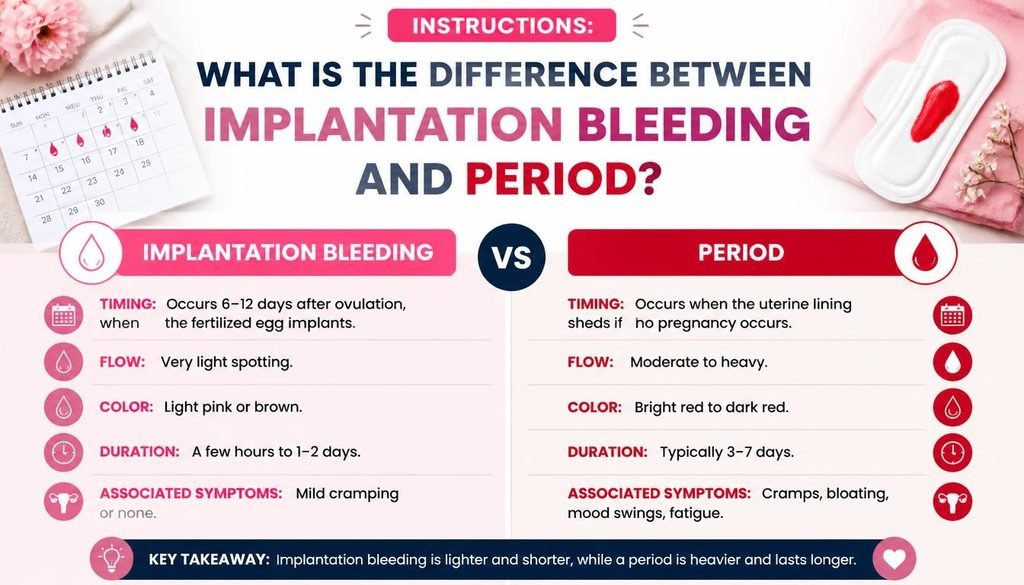
It’s harder to compare implantation bleeding vs. period, but there are some helpful differences.
- Flow: Implantation bleeding is light, and generally doesn’t require a pad or tampon. Usually begins light and gradually increases in intensity over the first day or two.
- Colour: Pink or brown implantation bleeding, rather than red. The blood is typically bright red at its heaviest, and may darken towards the end of the period.
- Typically, implantation bleeding lasts for a few hours to anywhere from one day to two. Typically takes 3-7 days.
- Clots: Don’t have blood clots, but they do with period blood.
- Period cramping: Minor to severe cramps may occur and persist for a day or more. Any cramping with implantation is usually mild and brief.
- Timing: Implantation bleeding may occur a few days before your period is expected, and a period will come on or about the expected date.
- When in doubt, the best way to determine if a woman is pregnant is to take a pregnancy test.
What Does Implantation Bleeding Mean in Early Pregnancy, and When Should You See a Doctor?
Implantation bleeding is one of the early pregnancy symptoms of possible implantation, but spotting is not a definitive indicator of pregnancy. Pregnancy tests detect the hormone hCG, which is only present following implantation, and it takes a few days for its level to build up to be detectable. It is best to take a home test on the first day of your missed period to get the most accurate result. If the test is negative and you still don’t get your period, repeat the test in a couple of days.
But there are other causes of light spotting in early pregnancy, including sensitivity of the cervix following sex or pelvic examination, and an infection. Another symptom of miscarriage or ectopic pregnancy could be bleeding, which might be an early sign.
If you have any of the following symptoms, get medical attention right away:
- When bleeding is heavy (like a period) or bloody
- Abdominal pain (very severe or persistent on one side)
- Pain in the shoulder area, dizziness or fainting.
- Abnormal bleeding, fever or discharge
If you get a positive pregnancy test and experience any bleeding, it’s wise to inform your healthcare provider as they may wish to conduct additional tests.
Conclusion
Implantation bleeding is a light spotting that typically happens around 6 to 12 days after conception and is generally not serious. However, it is hard to tell the difference from a period, but it has features that make it easier to distinguish from one, such as its pink/brown colour, light flow, short duration and absence of clots. Not all women get it; and spotting may be caused by other reasons, so a pregnancy test after a missed period is the most reliable method of determining a pregnancy. If the bleeding is heavy or painful, consult your doctor soon.
Reference:
https://my.clevelandclinic.org/health/symptoms/24536-implantation-bleeding


[…] Implantation bleeding: Happens around 6 to 12 days after conception when the fertilized egg attaches to the uterine lining. It usually lasts anywhere from a few hours to two days. […]
[…] can be deceiving as well. However, there are some who experience bleeding that does not fit into the definition of a period, such as spotting around the time of ovulation or […]