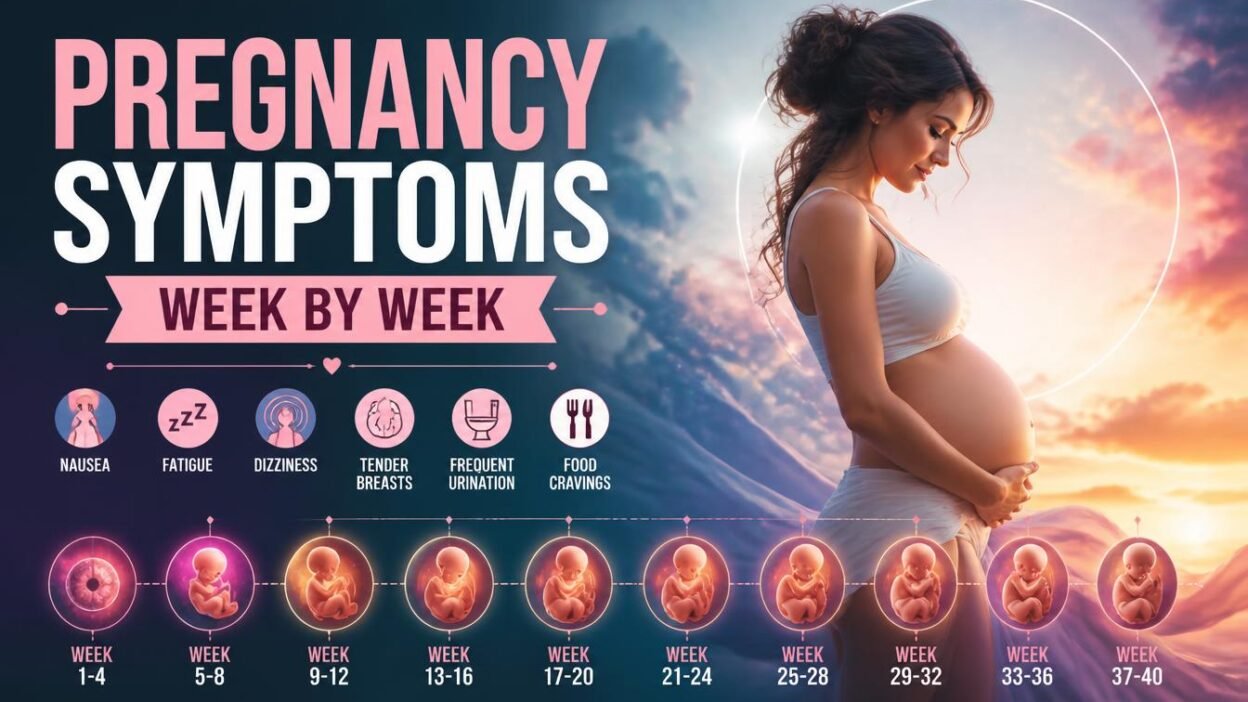
During pregnancy, many changes happen to almost all systems within the body and a lot of these changes are visible as pregnancy symptoms. Some may show up within days of the late period, some will gradually appear as the month goes. The timing and severity of symptoms is different for everyone and even from one pregnancy to the next.
It addresses five main questions: What are the common signs? What are the symptoms like week by week throughout the first trimester? How do the symptoms differ during the later stages of the pregnancy? How do they differentiate PMS, and how do they differ from normal? Which symptoms require medical attention?
What are some common signs and symptoms of pregnancy?
Changes in hormones, such as increased hCG, progesterone and oestrogen as well as blood volume, are the main causes of the common signs and symptoms of pregnancy. The most common ones are:
- If a woman has regular periods, a missed period is likely to be the first symptom.
- Tender and swollen breasts and may have darkening of the areolas
- Nausea (sometimes with vomiting) that may happen at any time of the day
- Fatigue – related to increased levels of progestogen
- Lots of urination due to increased blood flow to the kidneys
- Food aversions, cravings and an increased sense of smell.
- Bloating, constipation and mood changes
All of these are not tests to confirm pregnancy. The only sure way to confirm the pregnancy is to have a pregnancy test and then go to a healthcare professional for a checkup.
What Do You Experience During Week 1 to Week 12 of Pregnancy?
The first trimester of pregnancy is from the first day of the last menstrual period until the end of the 13th week. Now is how you’ll see yourself experience pregnancy symptoms throughout the week at this time.
- Weeks 1-2: Conception hasn’t occurred yet because these weeks contain your period and period of ovulation. No symptoms of pregnancy.
- Weeks 3-4: Fertilisation and implantation take place. The implantation typically occurs 6 to 12 days after ovulation, and some women will experience light spotting or mild cramping. Hormone levels of hCG could be detectable by a home test by the end of week 4, which is approximately the same time as a missed period. These are typically among the initial early signs of pregnancy.
- Weeks 5-8: This is when the first trimester symptoms of pregnancy become apparent. Breast tenderness, tiredness, frequent urination and sensitivity to smells are common symptoms starting around week 6 and are accompanied by nausea.
- Weeks 9–13: Nausea tends to be at its worst between weeks 8 and 10, but then starts to decrease. For most women it gets better by weeks 12 to 14, but some women feel it lasts longer. Fatigue may subside in the last few months of this trimester.
For some women early pregnancy symptoms range from being very mild and that is perfectly fine.
What are the changes in pregnancy symptoms during Second and Third Trimester?
- Second trimester (weeks 14 through 27): This is usually the most comfortable period of pregnancy as nausea and fatigue usually decrease. There could be new changes such as:
- Round ligament pain is a short, sharp pain, either right or left, on the lower abdomen as the uterus expands, and is a common occurrence.
- As digestion slows with progesterone, there may be heartburn or constipation.
- Nose congestion or nosebleeds as a result of blood flow to the nose increasing.
- Alterations in skin color – linea nigra (dark line on the belly) or darker patches on the face (melasma)
- First baby movements at approximately 16-22 weeks of pregnancy (which may be later if this is a first time pregnancy)
- The third trimester (28 – birth): During the final months of pregnancy, physical discomforts typically worsen. Common symptoms include back pain, shortness of breath, heartburn, swelling of the feet and ankles, trouble sleeping and a return of frequent urination. Irregular, typically painless contractions of the uterus called Braxton-Hicks contractions are usually more noticeable. Pressure on the pelvis increases in the last few weeks when baby is moving downwards.
What’s the difference between symptoms of pregnancy and symptoms of PMS?
Comparing the symptoms of pregnancy vs. PMS is hard because in each cycle that passes, there is a rise in progesterone. This means that breast soreness, bloating, fatigue, mood changes and mild cramps may be experienced with both.
There are a few differences to be found as clues. Nausea is frequent early in pregnancy, but not during PMS. Breast changes during pregnancy may persist or worsen, and any breast discomfort typically subsides with the onset of a period. In the case of implantation, there may be light pink or brown spotting, and in the case of PMS, there will be a normal period. Smells and foods that are repugnant are more common during pregnancy.
The most helpful is the timing: PMS symptoms typically go away within 1-2 days after menses begin, but pregnancy symptoms stay. Symptoms are so similar that they are not helpful in distinguishing the two. A positive result at any point starting from the first day of the missed period will be the most reliable indicator.
What Pregnancy Symptoms require medical attention?
While most pregnancy symptoms are normal, some indicate a problem. If you have any of the following symptoms, please consult your doctor or visit your hospital immediately:
- Excessive bleeding from the vagina or severe abdominal pain.
- Vomiting that is so bad and lasts so long that you have to get up to throw up, and you can’t eat or drink, may indicate hyperemesis gravidarum
- Severe headache, vision changes or sudden swelling of face or hands, possibly symptoms of preeclampsia, especially after 20 weeks
- Fever (or pain or burning when passing urine)
- Leaking from the vagina.
- Frequent cramping and/or regular painful contractions prior to 37 weeks.
- If there is a definite drop in activity in the last few months
A regular prenatal visit will enable your healthcare provider to keep an eye on your health and baby’s growth during your pregnancy.
Conclusion
Signs of pregnancy are very different in the first few weeks and last few days. Nausea, fatigue, and breast tenderness are common early signs, which usually happen in the first trimester; energy comes back during the second trimester, and both physical discomfort and pain worsened during the third trimester. Pregnancy testing is the only reliable test of pregnancy because the early symptoms are indistinguishable from PMS. Every pregnancy is unique and it is best to keep a close eye on symptoms and attend regular prenatal visits for you and your baby’s health.

“Hi, I’m Maya! As a mother and a passionate advocate for maternal health, I created Pregnancy Matter to be the safe space I wish I had while expecting. Through sleepless nights, endless Google searches, and the incredible journey of motherhood, I’m here to share real-talk, expert-backed insights, and a comforting hand to hold through every trimester.”


[…] bleeding is one of the early pregnancy symptoms of possible implantation, but spotting is not a definitive indicator of pregnancy. Pregnancy tests […]
[…] Keep an Active Cycle Journal: Record period start dates, cycle duration, fluid changes, and symptoms every month to build a clear picture of your personal cycle patterns. […]
[…] Even when spotting looks light and harmless, trusting your instincts matters. Contact your healthcare provider immediately—or head to urgent care—if your spotting is accompanied by any of these symptoms: […]