Are you wondering if you might be pregnant? Perhaps your period is a little late, you’re feeling unusually tired, or something just feels different. You’re not alone—and you’ve come to the right place. 🌸
Understanding the early signs of pregnancy can help you feel more informed and prepared, whether you’re actively trying to conceive or simply paying attention to your body’s signals. In this guide, we’ll walk through the most common symptoms, explain why they happen, and help you understand when it’s time to take a pregnancy test or speak with a healthcare professional.
Our goal is simple: to give you clear, accurate, and reassuring information. Every body is different, and every pregnancy is unique. What you experience might be completely different from someone else—and that’s perfectly normal. Let’s explore what you need to know.
🎯 What Are Early Signs of Pregnancy?
Early signs of pregnancy are physical and emotional changes that may appear in the first few weeks after conception. These symptoms occur as your body begins producing pregnancy hormones, particularly human chorionic gonadotropin (hCG) and progesterone .
Most people begin noticing symptoms around 4 to 6 weeks of pregnancy, which is roughly 1 to 2 weeks after a missed period . However, some may notice changes as early as one week after conception, while others may experience no symptoms at all during the first trimester .
Key Facts:
- Symptoms vary widely from person to person
- Some people experience many symptoms; others experience few or none
- Early signs can resemble premenstrual syndrome (PMS)
- A pregnancy test is the only way to confirm pregnancy
- Most symptoms are caused by hormonal changes
Understanding these signs helps you make informed decisions about testing and seeking care.
✅ The Most Common Early Signs of Pregnancy
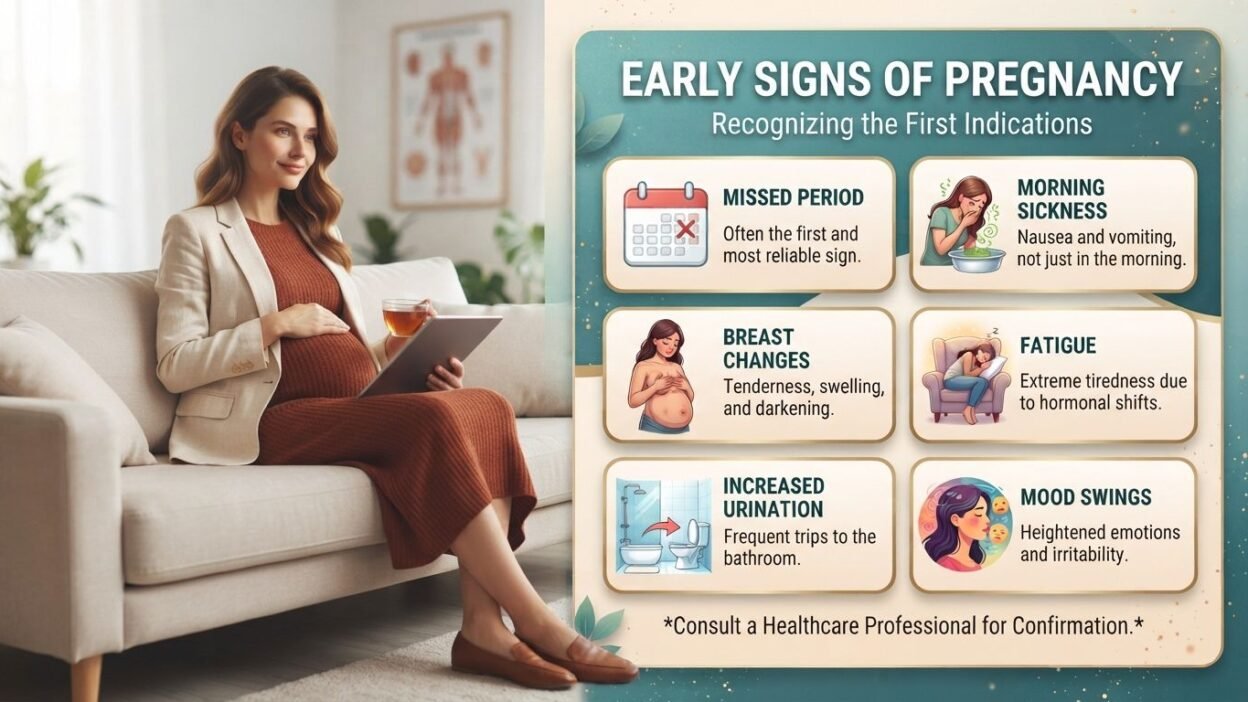
1. Missed Period
A missed period is often the first and most reliable sign of pregnancy .
What to know:
- If your cycle is regular and your period is a week or more late, pregnancy is possible
- After fertilization, your body stops shedding the uterine lining
- However, missed periods can also result from stress, hormonal imbalances, or certain medications
What to do: If you’ve missed a period and suspect pregnancy, take a home pregnancy test. These tests are highly accurate when used correctly.
2. Tender or Swollen Breasts
Breast changes often begin between 4 and 6 weeks of pregnancy, though some notice changes after just two weeks .
What you might experience:
- Breasts feel fuller, heavier, or more sensitive
- The areola (the area around the nipple) may darken or grow larger
- Small bumps called Montgomery’s glands may appear around the areola
Why it happens: Increased hormones prepare your breasts for breastfeeding. Discomfort typically improves after a few weeks as your body adjusts .
3. Nausea and Morning Sickness
Despite its name, “morning sickness” can strike at any time—day or night .
What to know:
- Nausea typically begins around week 6, though it can start earlier
- Some people experience nausea without vomiting
- The exact cause isn’t fully understood, but hCG and estrogen likely play roles
Practical tip: Eating small, frequent meals and avoiding strong odors may help. If nausea interferes with daily life or you can’t keep fluids down, contact your healthcare provider .
4. Fatigue and Exhaustion
Feeling unusually tired is one of the most common early signs .
What you might notice:
- Everyday activities feel more exhausting than usual
- A strong urge to rest or nap during the day
- Feeling drained even after adequate sleep
Why it happens: Progesterone levels rise dramatically, which can make you feel sleepy. Your metabolism also increases to support the pregnancy .
5. Increased Urination
You might find yourself making more trips to the bathroom than usual .
What to know:
- Blood volume increases during pregnancy, causing kidneys to process more fluid
- This leads to more urine production and more frequent bathroom visits
- As the uterus grows, it may also press against the bladder
Note: If urination is painful or accompanied by burning, it could indicate a urinary tract infection. Consult a healthcare professional to rule this out .
🌟 Less Common But Still Valid Early Signs
6. Light Spotting (Implantation Bleeding)
Some people notice a small amount of light bleeding or spotting around the time their period would be due .
What to know:
- This is called “implantation bleeding”
- It occurs when the fertilized egg attaches to the uterine lining, about 10 to 14 days after conception
- The bleeding is typically lighter than a normal period—more like spotting
- Not everyone experiences this
Important: Any bleeding during pregnancy should be discussed with a healthcare provider, especially if it’s heavy or persistent .
7. Cramping and Bloating
Mild cramping and bloating can occur early in pregnancy, often feeling similar to premenstrual symptoms .
What to know:
- Hormonal changes slow digestion, which can cause bloating and constipation
- Mild uterine cramping may happen as the embryo implants
- Severe or persistent pain should be evaluated by a medical professional
8. Mood Swings and Emotional Changes
The flood of hormones in early pregnancy can affect your emotions .
What you might experience:
- Feeling unusually emotional or tearful
- Increased irritability or sensitivity
- Rapid shifts in mood
Reassurance: These changes are normal and temporary. They typically improve after the first trimester .
9. Food Cravings and Aversions
Your relationship with food may change in surprising ways .
What to know:
- You might crave foods you normally don’t eat
- Certain smells or tastes may suddenly seem repulsive
- A metallic taste in your mouth is also common
Why it happens: Hormonal changes affect your senses of taste and smell .
10. Heightened Sense of Smell
Many pregnant people report that their sense of smell becomes more sensitive .
What you might notice:
- Ordinary smells seem stronger or more noticeable
- Certain odors trigger nausea
- You may detect smells others don’t notice
11. Nasal Congestion
Pregnancy hormones can cause the mucous membranes in your nose to swell, leading to congestion .
What to know:
- This can cause a stuffy or runny nose
- It’s sometimes called “pregnancy rhinitis”
- It’s harmless but can be uncomfortable
12. Changes in Vaginal Discharge
Increased vaginal discharge is a common early sign .
What to know:
- Discharge is typically milky white and mild-smelling
- This is normal and not a cause for concern if there’s no itching or irritation
- Any discharge with a strong odor or accompanied by discomfort should be evaluated
13. Constipation
Hormonal changes can slow your digestive system, leading to constipation .
Practical tips:
- Stay hydrated
- Eat fiber-rich foods
- Gentle physical activity can help
14. Headaches and Backaches
Some people experience headaches or lower back pain early in pregnancy .
What to know:
- Changes in blood flow and hormones can trigger these
- Sinus congestion may contribute to headaches
- Persistent or severe headaches should be discussed with a healthcare provider
15. Dizziness or Lightheadedness
Feeling dizzy or faint can occur due to changes in blood pressure and circulation .
What to know:
- Stand up slowly to avoid sudden drops in blood pressure
- Stay hydrated
- Persistent dizziness should be evaluated
🔍 When These Signs Might Mean Something Else
Many early pregnancy symptoms overlap with other conditions. Here’s what else they could indicate:
Bottom line: Symptoms alone cannot confirm pregnancy. A pregnancy test is necessary for accurate confirmation .
🩺 How to Confirm Pregnancy
Home Pregnancy Tests
- Available at pharmacies and supermarkets
- Detect hCG in urine
- Most accurate when taken after a missed period
- Can be taken as early as a few days before a missed period, though accuracy improves over time
When to Test
For the most reliable results:
- Wait until your period is at least one day late
- Test first thing in the morning when urine is most concentrated
- Follow package instructions carefully
Healthcare Provider Confirmation
If a home test is positive:
- Make an appointment with a healthcare provider
- They may perform a blood test or ultrasound to confirm
- Early prenatal care is important for you and your baby’s health
⚠️ When to Seek Urgent Medical Care
While most early pregnancy symptoms are normal, some signs require immediate medical attention. Seek emergency care if you experience :
- Severe headache that won’t go away or gets worse
- Dizziness or fainting
- Changes in vision (flashes of light, blind spots, blurred vision)
- Fever of 100.4°F (38°C) or higher
- Extreme swelling of hands or face
- Trouble breathing
- Chest pain or fast-beating heart
- Severe nausea and vomiting that prevents keeping fluids down for more than 8 hours
- Severe belly pain that doesn’t go away
- Vaginal bleeding heavier than spotting
- Fluid leaking from the vagina
- Severe swelling, redness, or pain in one leg
These symptoms could indicate life-threatening conditions such as ectopic pregnancy, miscarriage, or other complications. Do not wait—seek help immediately .
💡 How to Use This Information Effectively
Daily Habits for Early Pregnancy
1. Track Your Cycle
Knowing your typical cycle length helps you notice when something is different.
2. Listen to Your Body
If you’re experiencing multiple symptoms, consider taking a test. Trust your instincts.
3. Stay Hydrated
Drink plenty of water, especially if you’re experiencing frequent urination or constipation.
4. Rest When Needed
Fatigue is your body’s way of asking for rest. Don’t push through exhaustion.
5. Eat Small, Frequent Meals
This can help manage nausea and keep energy levels stable.
6. Avoid Harmful Substances
If you suspect pregnancy, avoid alcohol, tobacco, and unnecessary medications.
7. Take Prenatal Vitamins
Folic acid is especially important in early pregnancy. Consult your healthcare provider about appropriate supplements .
When to See a Doctor
- If you have a positive pregnancy test
- If symptoms are severe or worsening
- If you experience any urgent warning signs
- If you have concerns or questions about your health
❓ Frequently Asked Questions
What is early signs of pregnancy?
Early signs of pregnancy are the physical and emotional changes that occur in the first weeks after conception. They are caused by rising levels of pregnancy hormones, particularly hCG and progesterone. Common signs include a missed period, tender breasts, nausea, fatigue, and frequent urination .
What are the symptoms of early signs of pregnancy?
The most common symptoms include a missed period, breast tenderness, nausea with or without vomiting, increased urination, and fatigue. Less common symptoms include spotting, mood swings, bloating, food cravings or aversions, and nasal congestion .
How early can pregnancy symptoms start?
Most symptoms begin around 4 to 6 weeks of pregnancy, which is about 1 to 2 weeks after a missed period. However, some people notice changes as early as one week after conception, while others experience no symptoms during the first trimester .
🌸 Conclusion
Understanding the early signs of pregnancy empowers you to pay attention to your body and take appropriate action. Remember:
- Symptoms vary widely and not everyone experiences the same things
- Many symptoms overlap with other conditions
- A pregnancy test is the only way to confirm pregnancy
- Most symptoms are normal and temporary
- Some signs require urgent medical attention
If you suspect you might be pregnant, take a test and consult a healthcare professional. Early prenatal care is one of the most important things you can do for your health and your baby’s development.
We’d love to hear from you! Have you experienced any of these early signs? Share your thoughts in the comments below, or share this article with someone who might find it helpful. Your questions and experiences help others feel less alone on this journey. 💕