
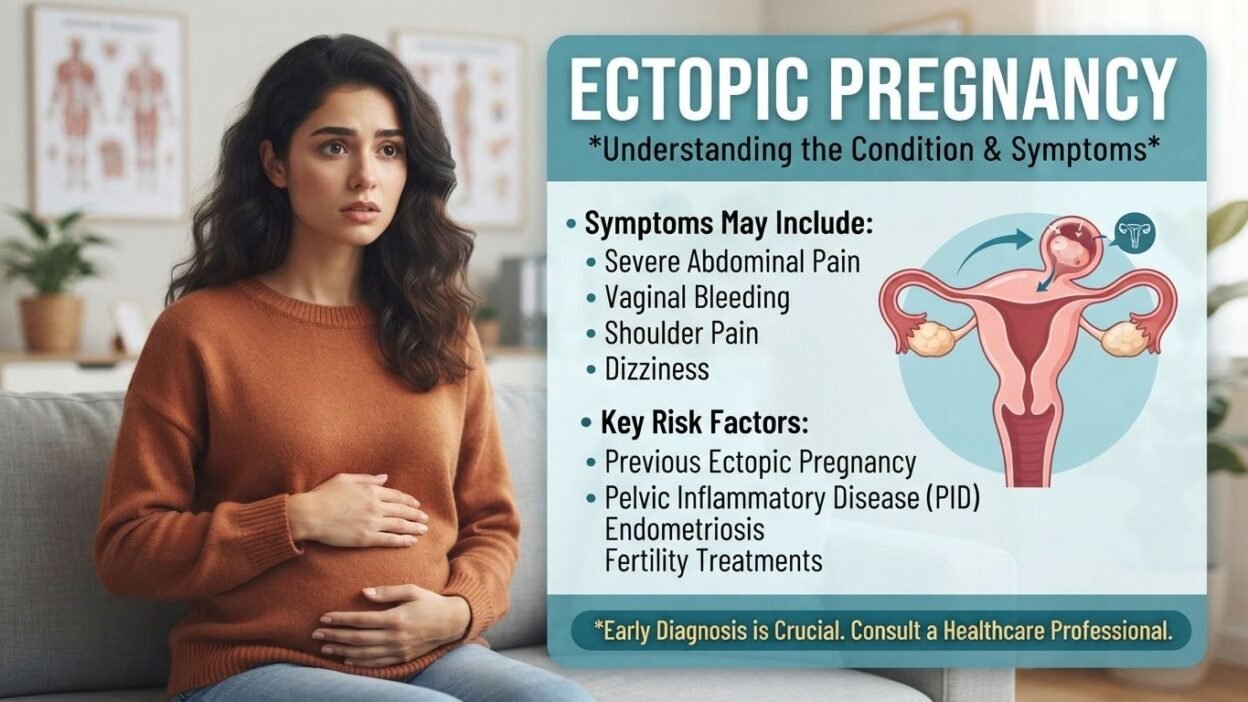
Finding out you’re pregnant usually comes with a mix of excitement, nerves, and a thousand questions. But sometimes, the news takes a turn nobody expects. An ectopic pregnancy is one of those situations—and it’s something every sexually active person should understand.
Here’s the short version: an ectopic pregnancy happens when a fertilized egg settles down somewhere it shouldn’t. Instead of implanting in the uterus, it gets stuck—usually in a fallopian tube. And because that tiny space wasn’t built to hold a growing pregnancy, things can get dangerous fast.
The tricky part? You might not even know it’s happening at first. The symptoms can be subtle, easy to brush off as a stomach bug or a weird period. But knowing what to look for could genuinely save your life.
This article walks you through everything—what causes it, how it’s diagnosed, what treatment looks like, and what happens afterward. No jargon overload. No scary statistics without context. Just straight answers.
So, What Exactly Is an Ectopic Pregnancy?
Think of your fallopian tubes as a pathway. Every month, an egg travels through one of them on its way to the uterus. If sperm meets the egg along the way, fertilization happens right there in the tube. Normally, that fertilized egg keeps moving until it reaches the uterus, where it can grow safely.
But sometimes, the egg doesn’t make it all the way.
It gets stuck. And when that happens, it starts to implant wherever it is—almost always inside the fallopian tube itself. That’s an ectopic pregnancy.
Here’s why this matters: the fallopian tube is tiny. It’s not stretchy like the uterus. It can’t expand to hold a growing pregnancy. So as the cells start to divide and grow, they put pressure on the tube. Eventually, if nothing is done, the tube can rupture. And when that happens, it’s a medical emergency.
The numbers: About 2 out of every 100 pregnancies are ectopic. Most of them—roughly 9 in 10—happen in a fallopian tube. The rest can occur in the ovary, cervix, or abdominal cavity, though those are rare.
The bottom line: an ectopic pregnancy can’t survive. And without treatment, it can put the pregnant person’s life at risk.
Who’s at Risk for an Ectopic Pregnancy?
Here’s the frustrating truth—sometimes there’s no obvious reason. About half of all people who have an ectopic pregnancy don’t have any known risk factors.
That said, certain things do increase the odds:
Higher risk:
- You’ve had an ectopic pregnancy before
- You’ve had surgery on your fallopian tubes
- You have a known problem with your tubes (like scarring or blockage)
- You were exposed to DES (a medication your mother may have taken during pregnancy decades ago)
Moderate risk:
- You’ve had pelvic inflammatory disease or certain STIs (like chlamydia or gonorrhea)
- You’ve struggled with infertility
- You’ve had multiple sexual partners (which increases infection risk)
Lower risk:
- You’ve had pelvic or abdominal surgery
- You smoke
- You became sexually active before age 18
Now, here’s the thing—having a risk factor doesn’t mean you’ll definitely have an ectopic pregnancy. And having zero risk factors doesn’t mean you’re in the clear. This is why paying attention to your body matters so much.
What Does an Ectopic Pregnancy Feel Like?
This is where things get tricky. Early on, you might feel completely normal. Some people only find out during a routine ultrasound.
But when symptoms do show up—usually somewhere between weeks 4 and 12—they tend to look like this:
The early warning signs:
- A missed period (which might make you think everything’s fine)
- Pain in your lower belly, often on just one side. It might come and go, or it might be constant
- Vaginal bleeding that’s different from your usual period—often darker, more watery, and lighter
- A strange pain near your shoulder tip. Weird, right? But this can happen when internal bleeding irritates nerves that share a pathway with your shoulder
- Discomfort when you pee or poop, or even diarrhea
Here’s the problem: these symptoms overlap with a lot of other things. A stomach bug. A urinary tract infection. A rough period. So it’s easy to dismiss them.
But if there’s any chance you could be pregnant—even a tiny one—and you’re having these symptoms, get checked. Don’t wait it out.
When It Becomes an Emergency
If an ectopic pregnancy ruptures, things escalate quickly. This is when you stop wondering and start acting.
Call emergency services or get to an ER immediately if you have:
- Sudden, sharp, intense pain in your abdomen
- Dizziness or fainting
- Nausea and vomiting
- Skin that looks unusually pale
These signs suggest internal bleeding. And internal bleeding doesn’t wait around. Every minute counts.
How Do Doctors Diagnose an Ectopic Pregnancy?
If you go in with symptoms, here’s what typically happens:
First, a transvaginal ultrasound. This uses a small probe inserted into the vagina to get a clear picture of your uterus and tubes. If there’s a pregnancy in the uterus, they’ll see it. If there’s a suspicious mass in a tube—or nothing in the uterus at all—that’s a red flag.
Second, blood tests for hCG. This is the hormone your body makes during pregnancy. In a normal pregnancy, hCG levels roughly double every two days. In an ectopic pregnancy, they rise more slowly—or plateau altogether. Tracking these levels over time helps doctors figure out what’s going on.
Sometimes, laparoscopy. This is a minor surgical procedure where a tiny camera goes into your abdomen. It’s the most direct way to see what’s happening, though it’s not always necessary.
Treatment: What Are Your Options?
Treatment depends on a few things—how far along the pregnancy is, whether it’s ruptured, your symptoms, and your hCG levels. There are two main paths.
Option 1: Medication (Methotrexate)
If the pregnancy hasn’t ruptured and you’re medically stable, your doctor might offer methotrexate. This is a medication that stops the pregnancy from growing by interrupting cell division.
What to expect:
- You’ll need regular blood tests to make sure hCG levels are dropping
- You might feel some abdominal pain, nausea, or fatigue
- You’ll need to avoid alcohol, folic acid supplements, and strenuous activity during treatment
- It can take a few weeks for everything to resolve
Option 2: Surgery
Sometimes medication isn’t an option—or isn’t enough. Surgery is needed if:
- The tube has ruptured
- You’re in severe pain or bleeding internally
- hCG levels are very high or climbing fast
- You can’t take methotrexate for medical reasons
The most common procedure is laparoscopy—minimally invasive, with a faster recovery. The surgeon either removes the pregnancy while saving the tube (salpingostomy) or removes the tube entirely (salpingectomy). In about 2 out of 10 cases, the tube has to go to stop the bleeding.
Recovery: What Happens Next?
Recovery looks different for everyone, but here’s a general idea.
Physically:
- After surgery, you’ll likely feel sore for a week or two. Shoulder pain is common—it’s from the gas they use during laparoscopy
- After methotrexate, expect some bleeding as hormone levels drop
- Your first period usually returns 6 to 8 weeks after treatment, though it can take longer
- Avoid heavy lifting, intense exercise, and sex until your doctor gives the green light
Emotionally:
This part doesn’t get talked about enough. An ectopic pregnancy is a pregnancy loss. Even if it was never viable, even if you weren’t sure you wanted to be pregnant—it’s still a loss. And it’s okay to grieve.
Some people feel sad. Some feel relieved. Some feel nothing at first, then get hit with it weeks later. There’s no “right” way to process this. If you’re struggling, reach out. Talk to your doctor, a counselor, or a support group. You don’t have to go through it alone.
Can You Get Pregnant Again After an Ectopic Pregnancy?
Short answer: yes, for most people.
Long answer: it depends on your situation, and there’s a slightly higher risk of it happening again. About 7 to 10 out of 100 people who’ve had one ectopic pregnancy will have another.
Because of that, doctors usually recommend an early ultrasound—around 6 to 8 weeks—in any future pregnancy. That way, they can confirm the pregnancy is in the right place.
If you’re planning to try again, have a conversation with your healthcare provider first. They can walk you through your specific risk and what monitoring makes sense.
Practical Tips: How to Prepare for a Doctor’s Visit
If you’re worried about an ectopic pregnancy—or you’ve already been diagnosed—here’s how to make the most of your appointment:
- Go sooner rather than later. Don’t wait to see if symptoms improve
- Write down your questions. It’s easy to forget them in the moment
- Bring someone with you. A second set of ears helps, and so does emotional support
- Be upfront about your history. Past infections, surgeries, ectopic pregnancies—all of it matters
- Ask for plain language. If something doesn’t make sense, say so. Your doctor should explain it clearly
FAQ
What is an ectopic pregnancy?
It’s when a fertilized egg implants outside the uterus—usually in a fallopian tube. It can’t survive, and without treatment, it can cause life-threatening bleeding.
What are the symptoms?
Early signs include one-sided belly pain, unusual vaginal bleeding, and sometimes shoulder tip pain. Emergency signs include sudden severe pain, dizziness, fainting, and pale skin.
When should I seek help?
If you might be pregnant and have any concerning symptoms, get checked promptly. If you have emergency signs, call for help immediately.
Final Thoughts
An ectopic pregnancy is scary, but it’s also treatable—especially when caught early. Knowing the signs, understanding your risk, and acting quickly can make all the difference.
If something feels off, trust that instinct. Call your doctor. Go to the ER if you need to. And if you’ve been through this, give yourself grace. Healing takes time—physically and emotionally.